A legacy of women’s healthcare design with Northside Hospital
Some projects become more than individual buildings. Over time, they become part of a larger story shaped by a long relationship, changing models of care and the opportunity to carry what has been learned from one generation of work into the next.
For hrd, our decades of work with Northside Hospital’s Women’s Centers tell that kind of story.
It began in Atlanta with an ambitious idea: create a Women’s Center with an identity and entrance distinctly its own. Rather than treating maternity and women’s health as another department within a hospital, Northside wanted to acknowledge childbirth as a positive healthcare experience and create an environment designed around the particular needs of women, infants and families.
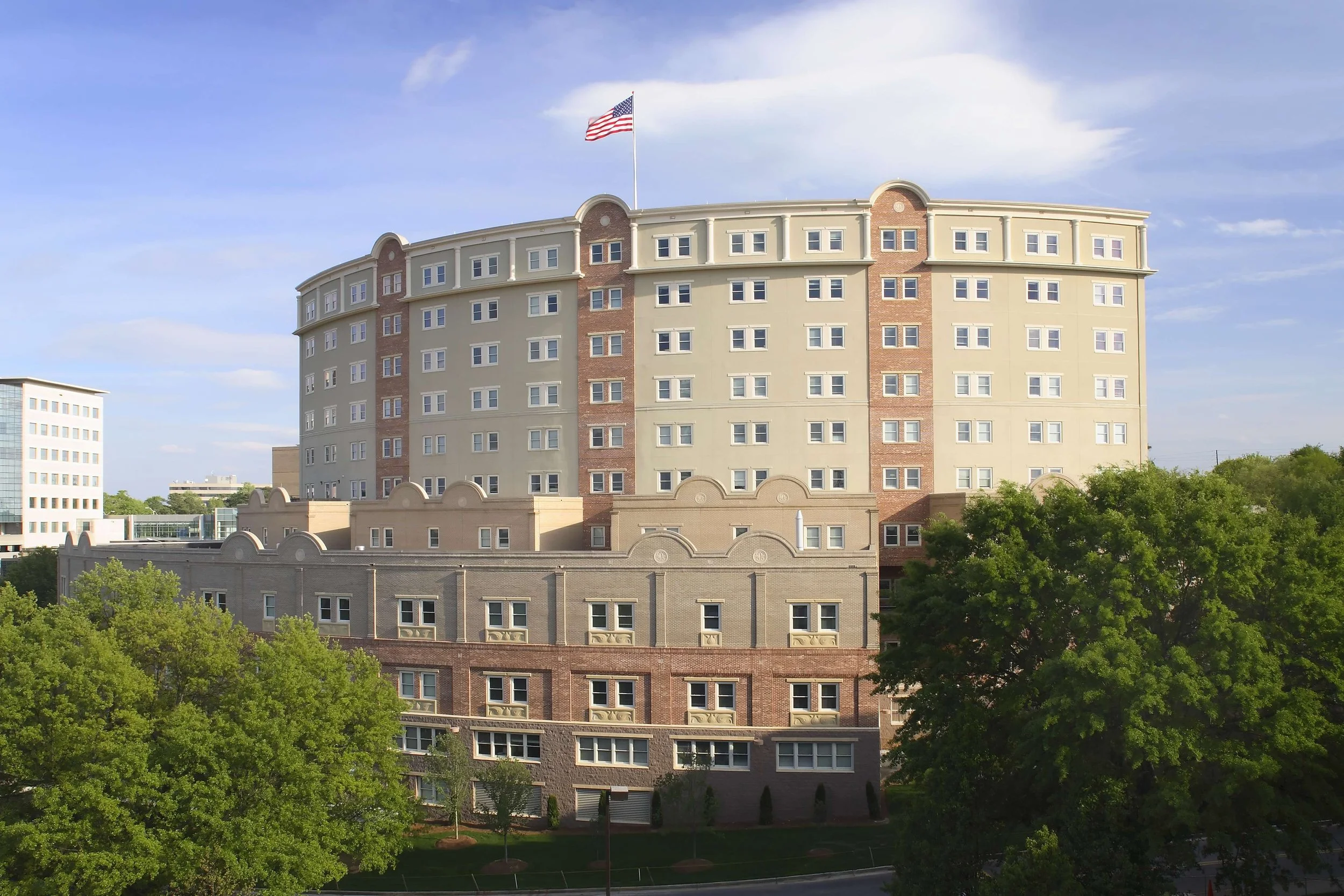
Planning for the Northside Hospital Atlanta Women’s Center began with a steering committee and a set of Guiding Principles that would influence not only the building in Atlanta, but the Women’s Centers that followed. Clinical performance was essential, but so were privacy, comfort, family involvement and a sense of welcome. The architecture itself needed to communicate that this was a different kind of healthcare environment—an early expression of what we might now describe as bringing more hospitality into the hospital experience.
When the Atlanta Women’s Center opened, it represented a significant shift in the delivery and experience of women’s healthcare. Northside describes it as the first and most comprehensive center focused on women’s health and wellness in the Southeast, bringing labor and delivery, high-risk perinatal care, neonatal services, diagnostics, outpatient care and education together in a dedicated environment. As Northside’s maternity program continued to grow, so did the center, including a major expansion completed in 2007.

What began in Atlanta did not stay there. As metro Atlanta expanded northward, Northside grew with it, bringing healthcare closer to rapidly developing communities in Forsyth and Cherokee counties. The Guiding Principles established for the original Women’s Center provided continuity, but they were never intended to produce the same building again and again. Each new campus offered an opportunity to apply what had been learned while responding to changes in care, technology and patient expectations.
At the Northside Hospital Forsyth Women’s Center, that evolution included an increasingly hospitality-influenced environment, greater privacy and spaces designed to support families as active participants in care. It extended into the NICU as well. While earlier neonatal environments often relied on open pods or bays, Forsyth incorporated private NICU rooms, reflecting new thinking about privacy, acoustics and the needs of both critically ill infants and their families. Contemporary coverage of the project described the design as responding to emerging directions in NICU care.
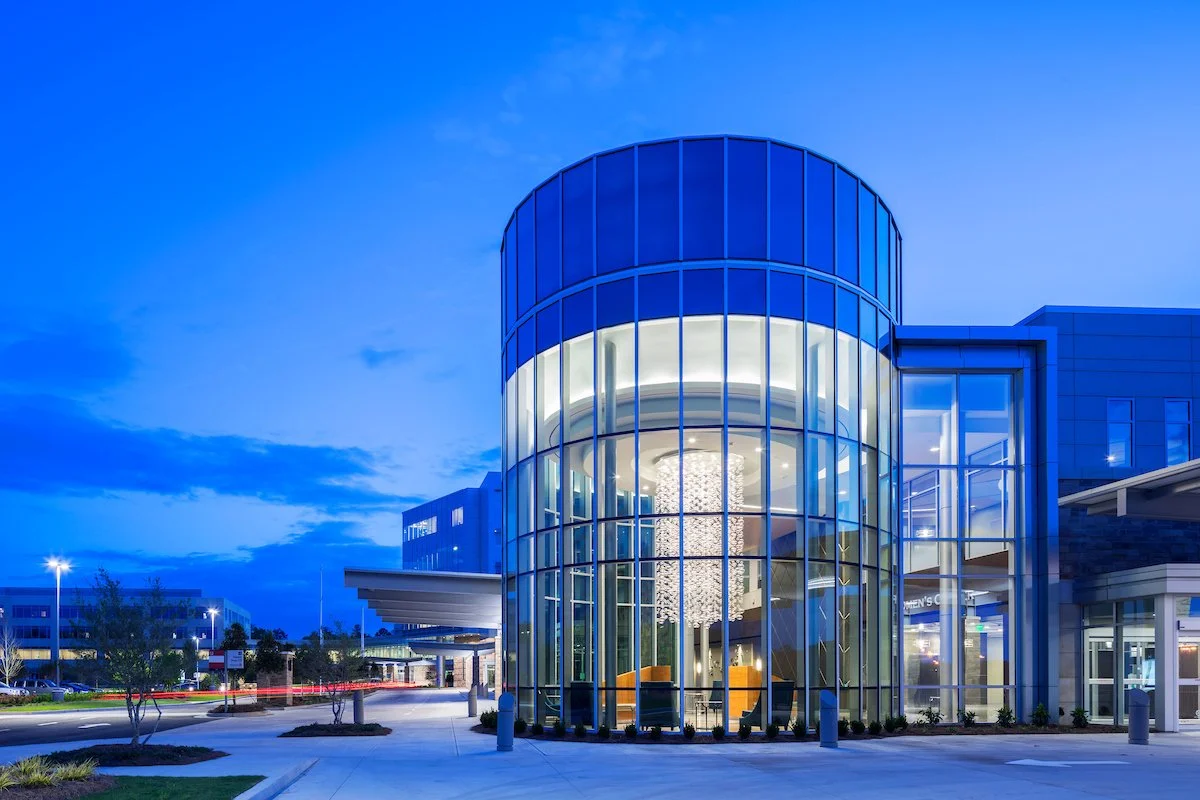
Years of shared experience informed the Northside Hospital Cherokee Women’s Center, part of an entirely new hospital campus serving another growing part of the region. Here again, the center was given a recognizable identity within the larger hospital, with its own prominent entry, galleria and illuminated rotunda. The original master plan anticipated future growth, allowing the center to expand vertically as demand increased. A later dedicated NICU carried the private-room concept forward; today both Cherokee and Forsyth include dedicated private Parent/Baby Rooms designed to support one-on-one care, teaching and family involvement.
Seen together, the three Women’s Centers offer a much richer story than any one project can tell. The geography traces the growth of metro Atlanta and Northside Hospital along with it. The architecture traces changing expectations for women’s healthcare, from the creation of a distinct and welcoming identity to increasingly family-centered maternity and neonatal environments. And the work itself reflects what becomes possible in a client relationship that lasts long enough for lessons from one project to genuinely inform the next.
For a firm with 120 years in Atlanta, that kind of continuity matters. Not because longevity is an accomplishment unto itself, but because experience becomes more valuable when it keeps moving forward. The Northside Women’s Centers show that evolution in built form: an idea established in Atlanta, reconsidered in Forsyth, advanced again in Cherokee and continuing to respond to what patients, families and caregivers need next.